Sleep Reset: 7-Day Guided Audio for Better Sleep
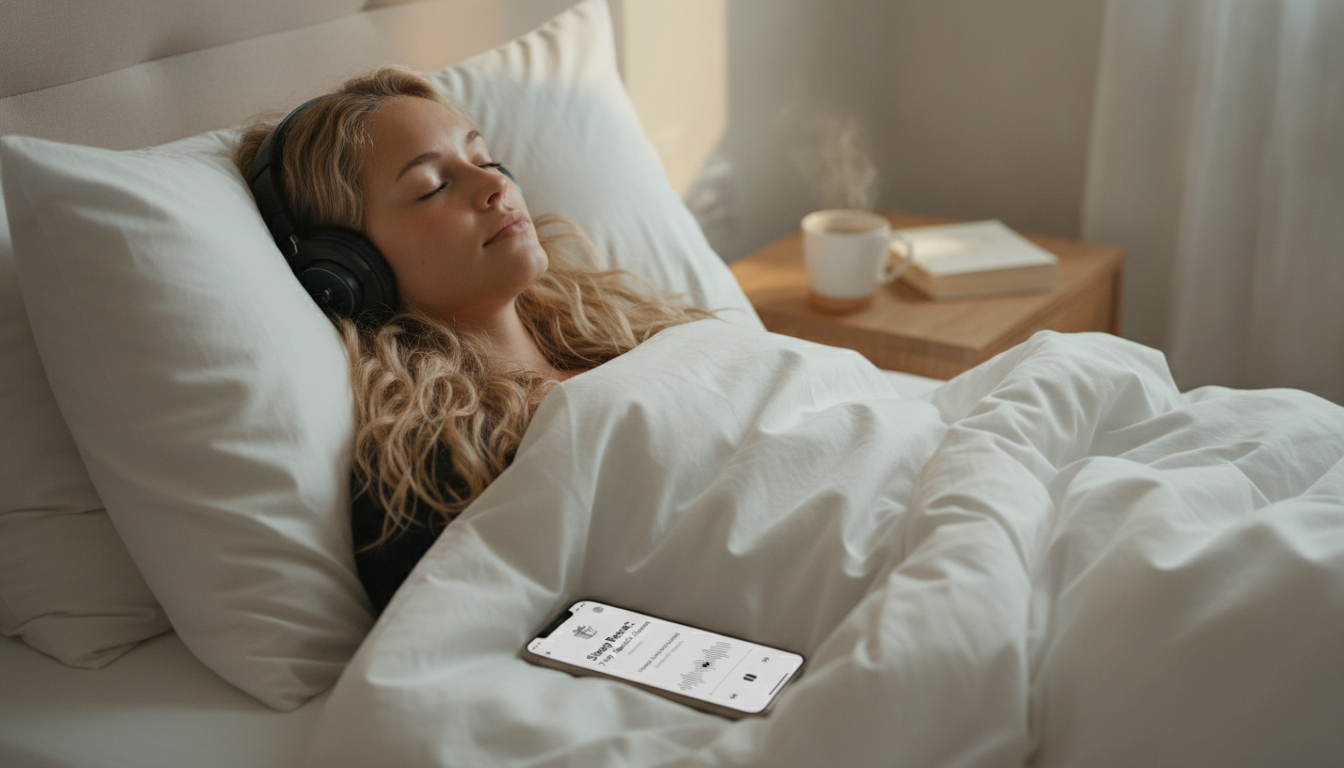
Sleep Reset: A 7-Day Guided Audio Course for Restful Nights
Sleep Reset is a guided audio program designed to help quiet a busy mind, ease the body into deep relaxation, and rebuild a consistent wind-down routine over seven days. The sessions pair calming narration with structured relaxation cues so falling asleep feels less like effort and more like a practiced skill—especially on nights when stress, racing thoughts, or irregular schedules get in the way.
Instead of leaving bedtime up to chance, Sleep Reset turns it into a repeatable sequence: dim the room, get comfortable, press play, and let the prompts do the heavy lifting. For many people, that “someone is guiding me” feeling makes it easier to stop problem-solving and start downshifting.
What Sleep Reset Is and How It Works
Sleep Reset is a guided audio course built around daily sessions that gradually reinforce a predictable pre-sleep routine. Each day builds on the last, using familiar relaxation tools in a simple, follow-along format.
- Daily sessions that strengthen a consistent wind-down rhythm over seven days.
- Relaxation techniques commonly used in meditation and sleep-focused practices: breath pacing, body scanning, progressive muscle release, and attention redirection.
- Designed for bedtime, but also useful for daytime rest when the body needs a reset (travel, shift work, high-stress days).
- Best results often come from repetition—using the session even on “good” nights helps stabilize the pattern.
Sleep science consistently points to routine and environment as major drivers of sleep quality. If you want a dependable baseline for healthier sleep habits, the National Heart, Lung, and Blood Institute’s healthy sleep guidance is a strong starting point. Sleep Reset fits into that bigger picture by making the “wind-down” step easier to repeat.
Who It’s For (and When It Helps Most)
Sleep Reset is designed for real-life sleep challenges—especially the ones that feel mental rather than physical. It can be a supportive layer alongside healthy habits, not a replacement for medical care when a disorder is suspected.
- Light sleepers who get stuck in alertness after waking during the night.
- People whose minds race at bedtime (planning loops, worry spirals, doom-scrolling habits).
- Anyone rebuilding sleep after a stressful season, travel, or inconsistent sleep times.
- Meditation beginners who want guided structure rather than silent practice.
- Those seeking a non-pharmacological support layer alongside healthy sleep habits.
If insomnia symptoms are frequent or persistent, it’s worth reading the American Academy of Sleep Medicine’s overview of insomnia to understand common causes and when evaluation can help. For many people, guided relaxation is most effective when combined with a consistent schedule and calmer evenings.
7-Day Session Roadmap
The course’s day-by-day structure reduces decision fatigue: press play and follow along. Early sessions focus on downshifting the nervous system; later sessions reinforce consistency and confidence around sleep. If you miss a day, continue with the next session rather than restarting—momentum matters more than perfection.
Example 7-Day Flow (Use as a Simple Nightly Checklist)
| Day | Focus | How to Use It | Helpful Tip |
|---|---|---|---|
| Day 1 | Signal safety to the body | Listen in bed with lights low | Keep the room slightly cool and remove bright screens 30–60 minutes before |
| Day 2 | Release physical tension | Follow muscle-softening cues | Unclench jaw and relax tongue against the roof of the mouth |
| Day 3 | Slow racing thoughts | Practice returning attention to the voice/breath | When thoughts appear, label them “thinking” and return |
| Day 4 | Stabilize a wind-down routine | Repeat the same pre-sleep steps | Use the same start time if possible, even on weekends |
| Day 5 | Reduce nighttime wake-up stress | Replay if waking overnight | Avoid checking the clock; keep volume low |
| Day 6 | Deep relaxation and letting go | Allow drowsiness without forcing sleep | If not asleep, stay with the cues—effort often backfires |
| Day 7 | Make it sustainable | Choose the best session to keep in rotation | Create a “minimum routine” for busy nights (5–10 minutes) |
How to Get the Best Results
Small setup choices can make guided audio feel more effective—especially when the goal is to reduce stimulation and gently nudge the nervous system toward sleep.
Mindfulness and relaxation practices are widely used as part of stress reduction. For a balanced overview of effectiveness and safety, see the National Center for Complementary and Integrative Health (NCCIH) page on meditation and mindfulness.
Troubleshooting Common Sticking Points
When to Seek Extra Support
What’s Included and How to Start Tonight
Recommended Picks (In Stock)
- Sleep Reset: Guided Audio Course for Restful Nights – 7-Day Sleep Meditation, Deep Relaxation, Insomnia Relief (digital-guided structure for a consistent wind-down)
- Calvin Klein Men’s Classic Cotton T-Shirt (a comfortable, low-fuss layer that can make evenings feel more “sleep-ready”)
FAQ
How long should the sessions be used before expecting changes?
Plan on a week of consistent use to notice meaningful shifts. Some people feel calmer right away, while sleep continuity and confidence often improve with repetition over 7–14 nights.
Can the audio be used if waking up in the middle of the night?
Yes. Keep the volume very low, avoid bright screens, and use the session as a neutral anchor to return to relaxation rather than a task you have to finish.
Is this a replacement for treatment of chronic insomnia?
No—consider it a supportive tool. If symptoms persist or worsen, evaluation is important, and evidence-based treatment options such as CBT-I may be appropriate.










Leave a comment